When people come back from a trip they remember the landscapes, but above all the people: tea offered by a stranger, the smile of a child in an Atlas village, music around the fire in the desert. The people of Morocco are the result of thousands of years of encounters between different cultures, and understanding them a little makes the trip much richer.
We are desert Berbers, and in this guide we explain simply who Moroccans are, what languages they speak and what everyday life is like.
The Amazigh, the original people
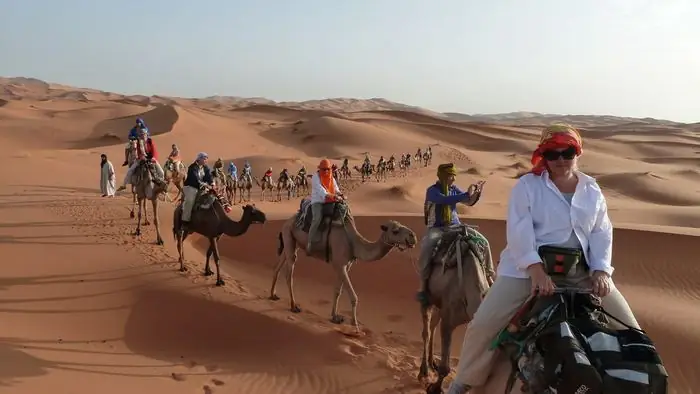
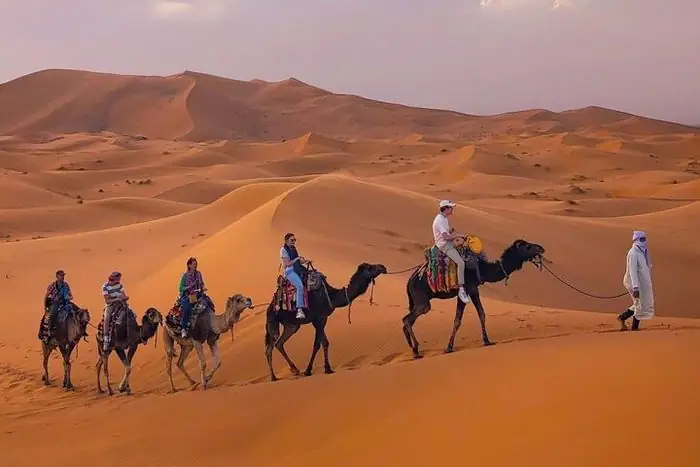
The Berbers, who prefer to call themselves Amazigh, meaning free people, have lived in North Africa for thousands of years. In today's Morocco Amazigh culture is everywhere: in the Atlas and Rif mountains, in the southern oases, in the music, rugs, jewellery and food. The desert nomads around Merzouga are part of this story.
Arabs, Andalusians, Jews and Gnawa
With the arrival of Islam, between the 7th and 8th centuries, came the Arab peoples; in the following centuries came the Andalusians who fled Spain, bringing architecture and music, and for a long time Morocco was home to a large Jewish community, of which the mellahs of the cities remain. The Gnawa, descendants of peoples from sub-Saharan Africa, gave the country a unique spiritual music, which you can hear in Khamlia near Merzouga.
The languages of Morocco
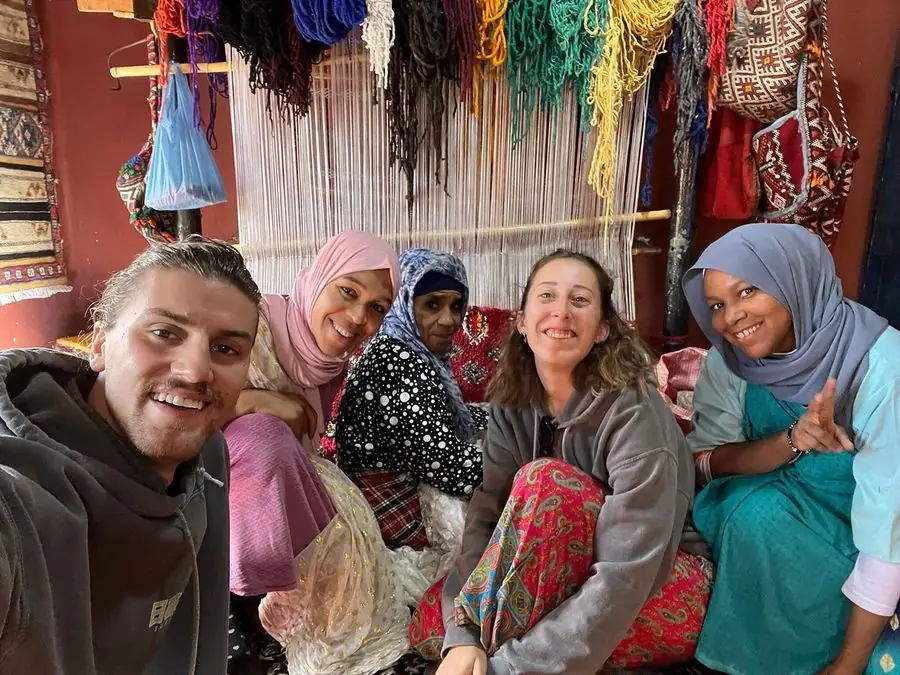
Since 2011 there have been two official languages: Arabic and Amazigh (Tamazight), written in the Tifinagh alphabet you will see on signs. In daily life people speak Darija, Moroccan Arabic. French is widely spoken in the cities and in tourism, Spanish in the north. Many guides and drivers also speak English: learning a few words, such as salam (hello) and shukran (thank you), brings lots of smiles.
We will prepare a personalised programme with a private driver, in English.
Religion and the rhythm of the day
The great majority of Moroccans are Muslim. The call to prayer marks the rhythm of the day, Friday is the day of communal prayer and family couscous, and during Ramadan life shifts to the evening. Morocco is a tolerant country used to visitors: a little respect for religious places and moments is all it takes.
Family and hospitality
Family is at the centre of everything: people often live in large families, eat together from a shared dish and the elderly are greatly respected. Hospitality is sacred: it is normal to be invited for a mint tea, and refusing outright is almost rude. If you are invited into a home, bring something sweet or some fruit.
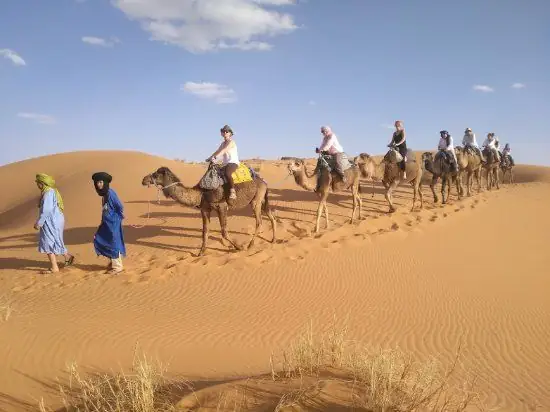
The people of Morocco in daily life
- the weekly souk, where villages meet to buy, sell and chat
- the hammam, the public bath, a place to wash and to meet
- mint tea, offered to every guest
- traditional clothing: the djellaba, the kaftan, the colourful headdress of Berber women and the blue cheche of the nomads
- festivals, weddings and moussems, with music, dancing and horsemen
How to behave: a few tips
- always say hello before asking for something
- ask permission before photographing someone
- use your right hand to give and receive
- dress modestly in the medinas and villages
- accept the tea: it is the best way to get to know someone
If you want to meet the most authentic Morocco, try our local culture experiences, such as lunch with a nomad family or the Gnawa music of Khamlia, and also read the guide on Hand of Fatima.
FAQ: people of morocco
To plan your trip: Official tourist information about Morocco.