When to go to Morocco is the first question almost every traveller asks us, and the honest answer is: it depends on what you want to see. Morocco is a big, varied country where in a single day you can go from snow in the High Atlas to the dry heat of the Sahara. We live in Merzouga, at the gateway to the desert, and accompany travellers twelve months a year: in this guide we explain how the weather changes season by season and which time to choose for your itinerary.
In short: the most pleasant months for a full tour are March, April, May, October and November. But winter and summer have their advantages too, if you know how to plan.
The best time at a glance
Here is a quick summary, season by season, before we go into detail.
- Spring (March–May): ideal weather everywhere, green valleys and almond blossom in the Atlas.
- Summer (June–August): perfect for the Atlantic coast, very hot inland and in the desert.
- Autumn (September–November): mild temperatures, golden light, the date harvest in the oases.
- Winter (December–February): sunny days, cold nights in the desert and snow on the mountains.
Spring: the favourite season
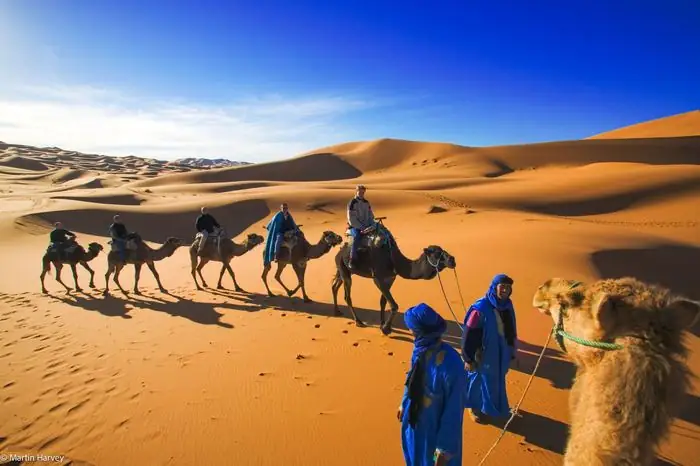
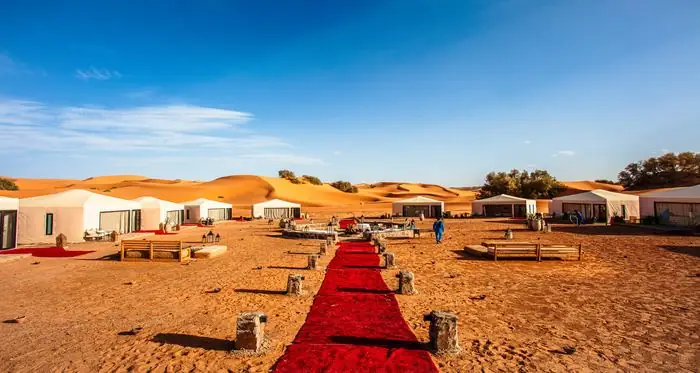
From March to May Morocco is at its best. In Marrakech and Fes the days are warm, often 22 to 28 degrees, and the evenings cool but pleasant. In the Dades and Draa valleys the oases are green and wheat fields alternate with palm trees. In the Merzouga desert it is warm by day but not too hot, and nights at the camp are perfect for stargazing.
It is also the busiest period, especially around Easter and the May bank holidays: if you want to travel on those dates we recommend booking your riad and desert camp a few weeks in advance. In the Valley of Roses, around Kelaat M'Gouna, the flower harvest is usually celebrated in May with a traditional festival.
Summer: yes to the sea, careful with the desert
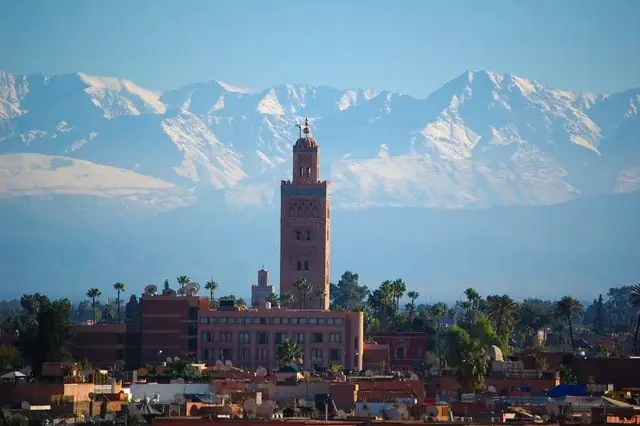
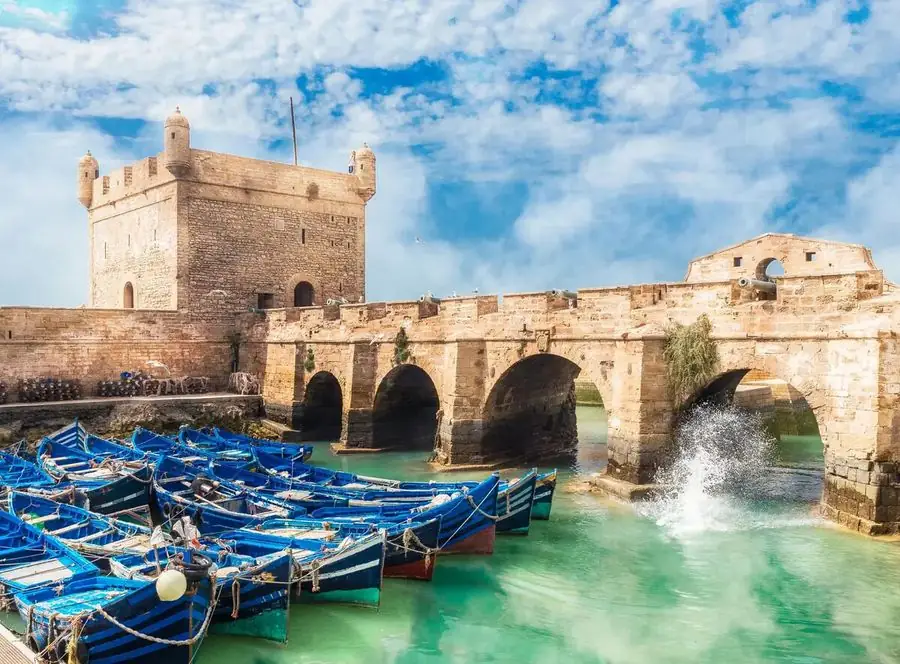
July and August are holiday months, so it is natural to wonder whether it makes sense to travel in summer. The answer is yes, with the right itinerary. On the Atlantic coast, in Essaouira, Agadir, Rabat or Tangier, temperatures stay pleasant thanks to the ocean breeze. Marrakech, on the other hand, often exceeds 38 degrees and the Sahara can reach 45.
You can see the desert in summer too, and we do it every year: you travel in the cool hours, climb the dunes at sunset and sunrise, and rest in a kasbah with a pool in the middle of the day. The night at the camp is pleasantly warm and the sky is full of shooting stars, especially in August.
We will prepare a personalised programme with a private driver, in English.
Autumn: golden light and fewer crowds
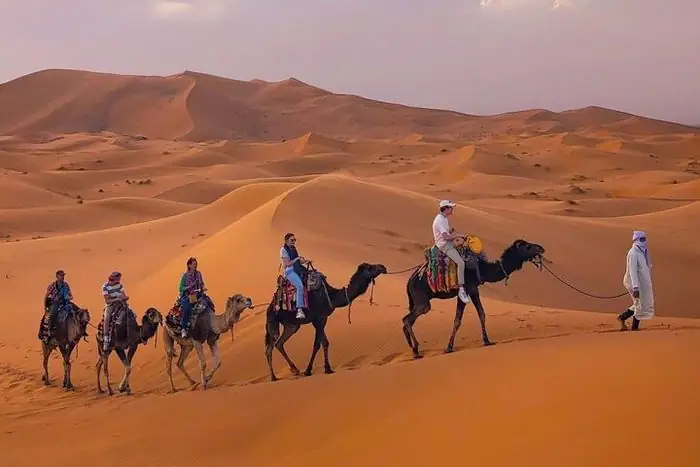
September is still hot in the south, but from October the weather becomes ideal again across the country. It is our favourite season for desert tours: the days are clear, the Erg Chebbi sand takes on incredible colours at sunset and in the Tafilalet oases the date harvest begins, celebrated in Erfoud with a festival usually held in October.
In autumn there are also fewer crowds than in spring, and flight and accommodation prices are often lower. November is still excellent, with a few more rainy days in the north.
Winter: sunny days, stars and cold nights
Many people don't know it, but winter is a good time to discover Morocco. From December to February the days are almost always sunny, with around 18–20 degrees in Marrakech and the desert. At night, however, the temperature drops a lot: in Merzouga it can get close to zero, and on the High Atlas passes, such as Tizi n'Tichka, it can snow.
With the right clothing it is a wonderful experience: the camps provide thick blankets and the winter sky over the Sahara is among the clearest of the year. New Year in the desert is one of our most popular trips, so it is best to book early.
Ramadan and holidays: what changes for travellers
Ramadan follows the lunar calendar and moves about 11 days earlier each year: in 2027 it will fall roughly between February and March. Travelling during Ramadan is possible and even fascinating: hotels and tourist restaurants stay open, while some places frequented by Moroccans close during the day. In the evening, after sunset, the cities come alive with iftar, the meal that breaks the fast.
We only ask you not to eat or drink conspicuously in the street during the day, out of respect. During the big festivals, such as Eid al-Adha, transport is very crowded: it is best to know in advance.
When to go to Morocco based on your trip
The right time varies a lot depending on what you want to do. Here are our tips for each type of trip.
- Merzouga desert or Erg Chigaga: from October to April; in summer with adjusted timings. See the 3-day tour from Marrakech to Merzouga.
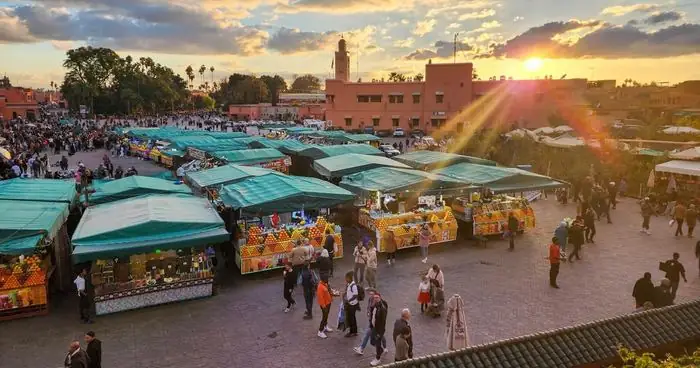
- Imperial cities (Marrakech, Fes, Meknes, Rabat): all year round, best in spring and autumn.
- Sea and surf (Essaouira, Taghazout): from May to October for the sea, from October to March for the waves.
- Trekking in the High Atlas: from April to June and from September to November.
- Snow at Oukaïmeden: from January to March, if it is a snowy winter.
Whatever the season, we can adapt the programme: with a private driver you choose the times and stops, and in the hot months we schedule visits at the best times of day.
FAQ: best time to visit morocco
To plan your trip: Official tourist information about Morocco.